
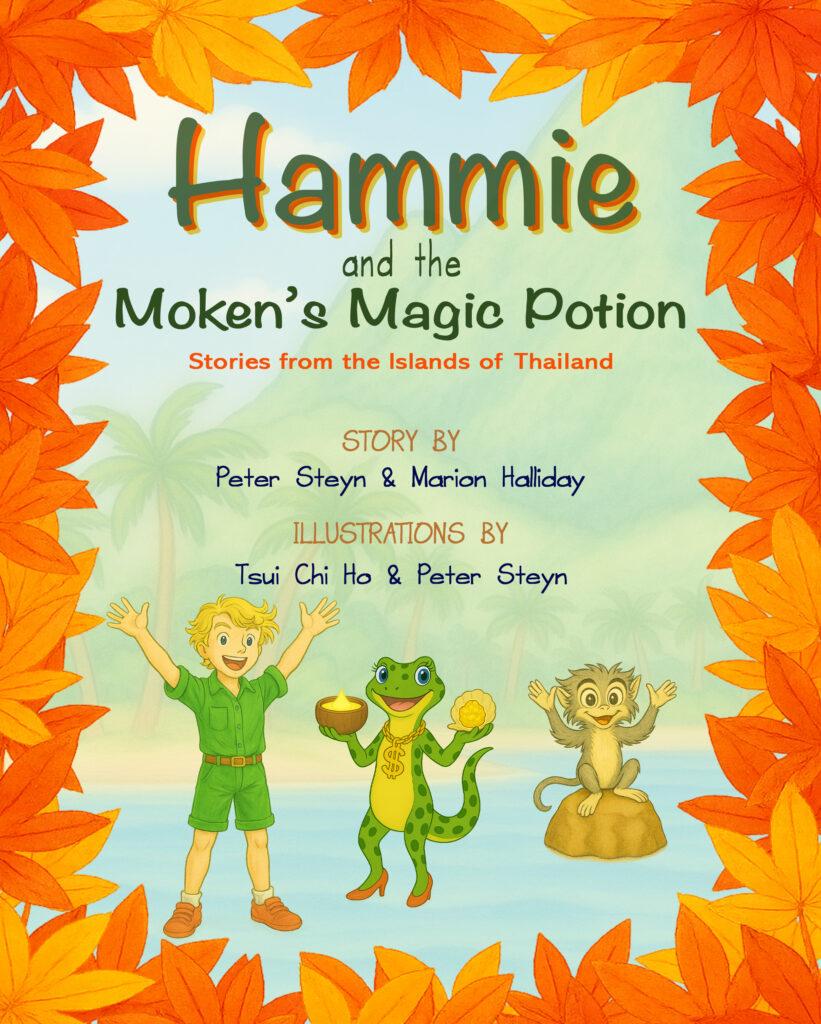
Hammie and the Moken’s Magic Potion is a heartwarming children’s adventure set among Thailand’s tropical islands. When city boy Chakrit (Hammie) stumbles into a hidden world of talking animals and sea creatures, he discovers that courage comes in many forms. Alongside Lizzy, a runaway princess gecko, and a cast of colourful animal friends, he must help save their fragile island home. It’s a story of friendship, bravery, and the magic that happens when friends support each other.
This story was crafted with care, each character shaped and refined over time so their voices, flaws, and quiet strengths would feel alive on each page. The authors spent considerable effort not only to carve distinct personalities but to let them grow and shift naturally across the arc of the tale.
Introduction to the Character Profiles
For this report, we focus on ten of the main characters whose journeys form the core of the story. Limiting the scope in this way allows us to explore their inner worlds in depth while keeping the analysis concise and centred on what drives the narrative.
At its heart, Hammie and the Moken’s Magic Potion is not just a tale of adventure across tropical islands but a deeply human story about courage, connection, and the way personal transformation ripples outward to heal a community and its environment. This report explores the inner worlds of ten of the main characters, peeling back layers of personality, motivation, and vulnerability to reveal how each contributes to the story’s emotional depth and thematic power.
Hammie’s quiet metamorphosis – from a solitude-seeking city boy to a leader who discovers that true bravery is born in the service of others – is mirrored by Lizzy’s tender journey back from self-exile. Her transformation from a runaway dancer into a compassionate, responsible queen-in-waiting is not just a character arc; it’s the emotional heartbeat of the story. Together, they embody the idea that saving a world begins with saving yourself – and then choosing to share that courage with others.
Around them orbits a cast of characters who are anything but secondary. Goggles’ anxious loyalty, Lekkie’s loud humour masking quiet bravery, Billy’s steadfast wings, Captain Somtam’s calm wisdom, and Mama Ruth’s grounded strength each bring their own colours to the narrative. Even the antagonists, Gingga and Sting (along with Mackie and Sandy, who are not included in this profile analysis), are not mere villains but reflections of what happens when longing for recognition curdles into greed and fear. Through them, the story explores the cost of disconnection from community, from nature, from gratitude.
What binds these arcs together is the story’s refusal to rely on a singular “chosen one.” Instead, it offers a collective hero’s journey: a celebration of interdependence where each character’s strength fills another’s gap, and their flaws become opportunities for others to shine. The environmental themes – the need to protect the islands, respect the balance of nature, and heal what’s been broken – are not abstract. They live and breathe in the characters’ choices, in Hammie’s instinct to pick up litter, in Lizzy’s vow to ban abandoned fishing nets once she is crowned, in Angun’s quiet gift of ancient wisdom.
This analysis shows that the characters’ psychological landscapes are not separate from the story’s larger themes but are the very soil from which they grow. Their growth is the islands’ healing; their courage is the potion of hope.
If you’d rather explore our character profiles VISUALLY instead of reading the text below, click the button below. It’s a great way to get to know them at a glance!
The Psychological Landscape
The story unfolds across the emerald waters and fragile ecosystems of southern Thailand’s Mu Koh Ang Thong Archipelago in the Gulf of Thailand before moving on to Koh Tarutao in the southern Andaman Sea. From there, the journey continues north into the northern Andaman Sea to Boulder Island (Burmese: Nga Khin Nyo Gyee Kyun) in the waters of Myanmar (Burma) – places of breathtaking beauty and subtle danger.
The islands are not mere scenery; they are living entities. Their lush jungles, teeming reefs, and quiet, empty beaches shape the cast’s motivations and fears as much as any antagonist. The paradise they fight to protect is not just a setting but a mirror, reflecting both the wonder of what’s at stake and the urgency of what could be lost.
Understanding the psychological depth of each character is key to understanding the story itself. Themes of leadership, environmental stewardship, tradition balanced with progress, and the power of collective action are not delivered through speeches or exposition but lived through Hammie, Lizzy, and their companions. Their choices, flaws, and small victories are where the larger messages breathe.
At the core lies a story about connection – to each other, to the land and sea, to the quiet courage that emerges when individuals come together for something greater. Hammie’s quest for solitude becomes the spark for a community to rise. Lizzy’s return from the city is more than a princess reclaiming a throne; it’s a daughter, a dancer, a friend rediscovering where she belongs and choosing to lead with love.
The supporting cast reinforces this collective heartbeat. Goggles’ trembling yet loyal hands, Lekkie’s ridiculous boasts masking genuine courage, Billy’s vigilant watch from above, Captain Somtam’s steady voice in storms, Mama Ruth’s generational wisdom, and Angun’s ancient calm all create a web of interdependence. Even their adversaries, Gingga and Sting, sharpen the story’s themes: their exploitation and greed highlight the fragile magic of community and care that Hammie and Lizzy fight to protect.
This is not a story of a single chosen hero but a shared act of heroism. Every character, from the smallest leech to the wisest elder, becomes a vital note in a larger song. Together, they remind us that great battles – whether to save a kingdom, an island, or a fragile piece of paradise – are never won alone. True strength lies not in one voice shouting into the wind, but in many voices rising together.
Now, we’ll explore ten selected character profiles in more detail. For deeper insights and side-by-side comparisons, click the button below to explore the different ways to view the character profile mapping.
Character Profile: Hammie (Chakrit)
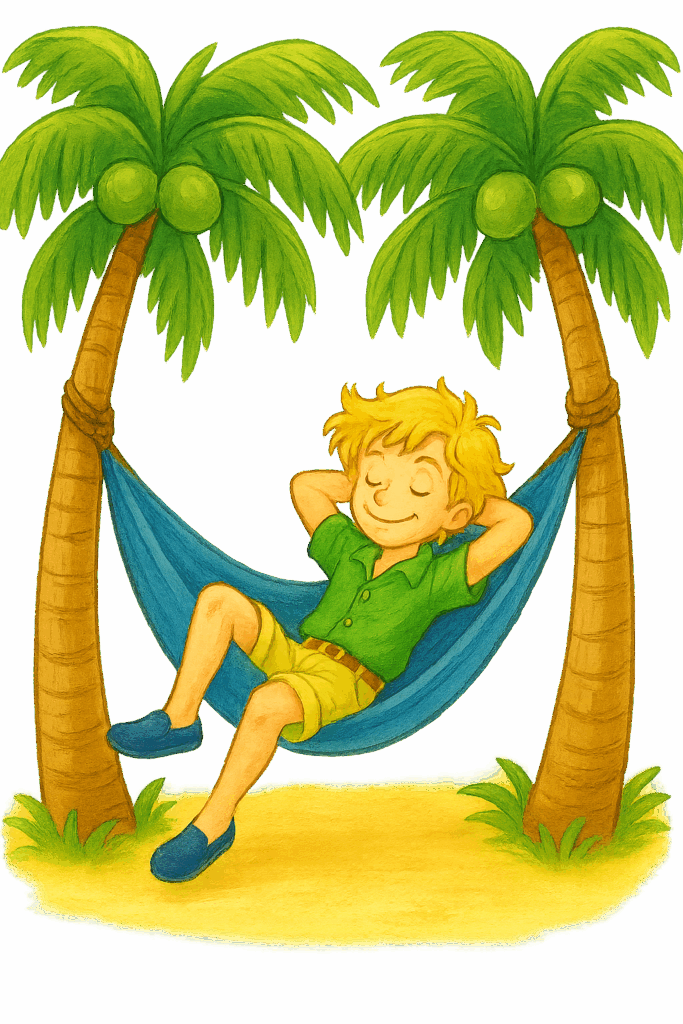
Chakrit, affectionately nicknamed Hammie because he loves relaxing in his hammock, arrives on a Thai island for a peaceful birthday camping trip. The city boy’s plans quickly change as he befriends local animals and uncovers a royal crisis. Kind, observant, and surprisingly brave, Hammie embraces unexpected challenges and passes difficult tests, showing loyalty and courage. He grows from a curious visitor into a resourceful hero, entrusted with ancient secrets vital to saving his new friends and their magical island kingdom.
Psychological Traits and Emotional Complexities
Hammie, whose real name is Chakrit, begins as a boy craving introspection and tranquillity. His birthday wish is modest yet telling: “A few quiet days camping alone on a tropical island,” deliberately choosing peace over “a noisy party with all his friends or eating out in a crowded restaurant.” This highlights an initial preference for solitude and personal reflection.
Despite this desire for quiet, Hammie is naturally curious and deeply observant. From the moment he steps onto the island, his attention lingers on every detail – the soft gaze of a spectacled langur, the flash of a hornbill’s wing, even a humble leech in the bathroom of the camping area. His first glimpse of Goggles sparks immediate connection: “Was it the same cute monkey who had waved at him yesterday?” That single thought captures his ability to notice, wonder, and form bonds even in unfamiliar territory.
Empathy lies at Hammie’s core. His sadness at Princess Gekkie’s story – “That’s sad that she couldn’t do what she loved (dancing)” – and his dismay at the lizards’ destruction of the islands show a heart that instinctively protects both life and the environment. When Goggles is visibly upset, Hammie feels an immediate, almost instinctive need to help, recognising the weight of the moment. His compassion quickly becomes action.
Resilience underpins Hammie’s journey. Determined to get his tent “exactly right,” willing his legs to keep climbing during the second test, and recovering from falls and scrapes all demonstrate a quiet, stubborn strength. His meticulous trip planning – packing a lightweight tent, blue hammock, colourful sarong, flashlight, water, bananas, and even mangoes – shows foresight and self-sufficiency, qualities that serve him well when the adventure turns dangerous.
Underneath all this runs a vein of gentle humour and warmth. Hammie’s ability to laugh, reassure, and keep the mood light, even in uncertainty, draws others to him. His optimism shines in moments like telling Lizzy, “Let’s move on. We’ve got four more spots to search, and I have a feeling we’re going to get lucky soon,” a hopeful spark that lifts everyone around him.
Motivations and Core Values
Hammie’s initial motivation is personal: a birthday “gift to himself” of peace and adventure. This quickly evolves into a greater purpose – finding inner peace through helping others and serving something larger than himself.
At the heart of his actions lies an innate sense of justice and stewardship. His habit of picking up litter even before the quest begins, reflects a pre-existing care for the environment. The plight of the animals ignites that moral compass further, shifting his focus from self to community.
His bond with Goggles, Lizzy, and the island creatures becomes his strongest driving force. His whispered birthday wish – for Princess Gekkie to return and “stop the lizards and mosquitoes from taking over these islands” – reflects a loyalty to his newfound friends and a growing sense of responsibility. What starts as a personal retreat transforms into a journey of courage, leadership, and protecting what truly matters.
Strengths and Vulnerabilities
Hammie’s strengths lie in quiet courage, empathy, and emotional growth. While he starts off uncertain and slightly naive, he proves his heart, bravery, and adaptability through every trial he faces — growing into a true island hero.
Hammie’s strengths:
- Empathy and openness: Hammie quickly connects with both people and animals, from Goggles the monkey to Betty the batfish, showing deep emotional intelligence and kindness.
- Courage in adversity: Despite his fears, he accepts the dangerous tests, climbs cliffs, braves mosquito armies, and enters dark caves with quiet determination.
- Adaptability: He embraces his new identity and environment, integrating into the island community and accepting his “Hammie” nickname as part of a personal transformation.
- Trustworthiness: Angun, the Moken elder, entrusts him with the potion’s secret because Hammie can “see beyond the surface” — a rare kind of wisdom in someone so young.
Hammie’s vulnerabilities:
- Physical fragility: Scrapes, a painful fall, and moments of exhaustion remind us of his youth and human limits.
- Naivety: He arrives expecting a peaceful holiday, unprepared for the island’s deeper challenges and mysteries.
- Private self-doubt: While outwardly calm and reassuring, he quietly admits to himself that “deep down he wasn’t so sure,” revealing hidden insecurities beneath his brave face.
Background and Influences
As a “city boy” from Bangkok, Hammie arrives with limited experience of jungle life, making his adaptation all the more striking. This outsider status gives him a fresh, unbiased perspective on the island’s politics. His supportive home life – parents trusting him to camp alone for the first time – suggests an upbringing that fostered independence and self-reliance, key traits in his survival and growth.
Crucially, his closest friend is Lizzy, a bright green-and-yellow gecko from his apartment building. This simple, quirky city friendship becomes the emotional heartbeat of the story, unknowingly linking him to the royal gecko kingdom. His trust and affection for Lizzy make his acceptance of the island’s magical reality immediate and heartfelt, and ultimately, she becomes the bridge between his old life and his new purpose.
Internal Conflicts and Growth
Hammie’s central conflict lies between his desire for solitude and the sudden call to leadership. His journey forces him to shift from seeking inner peace to actively protecting others, transforming from a passive visitor to a decisive protector. This shift defines his arc: self-reflection turning into selfless action.
A second conflict comes from his naivety versus the demands of leadership. As a “city boy,” he begins unsure and physically vulnerable, but the trials force him to grow into someone brave, resourceful, and willing to carry responsibility. His acceptance of the nickname “Hammie” symbolises this rebirth – no longer just Chakrit on a quiet holiday, but a boy stepping into courage, friendship, and purpose.
By the end, Hammie embodies quiet heroism: curious, empathetic, resilient, and deeply connected to the world around him. His journey teaches him – and those around him – that true strength isn’t loud or forceful; it’s caring deeply, acting bravely, and fighting the battles that truly matter.
Lizzy (Princess Gekkie), the gecko
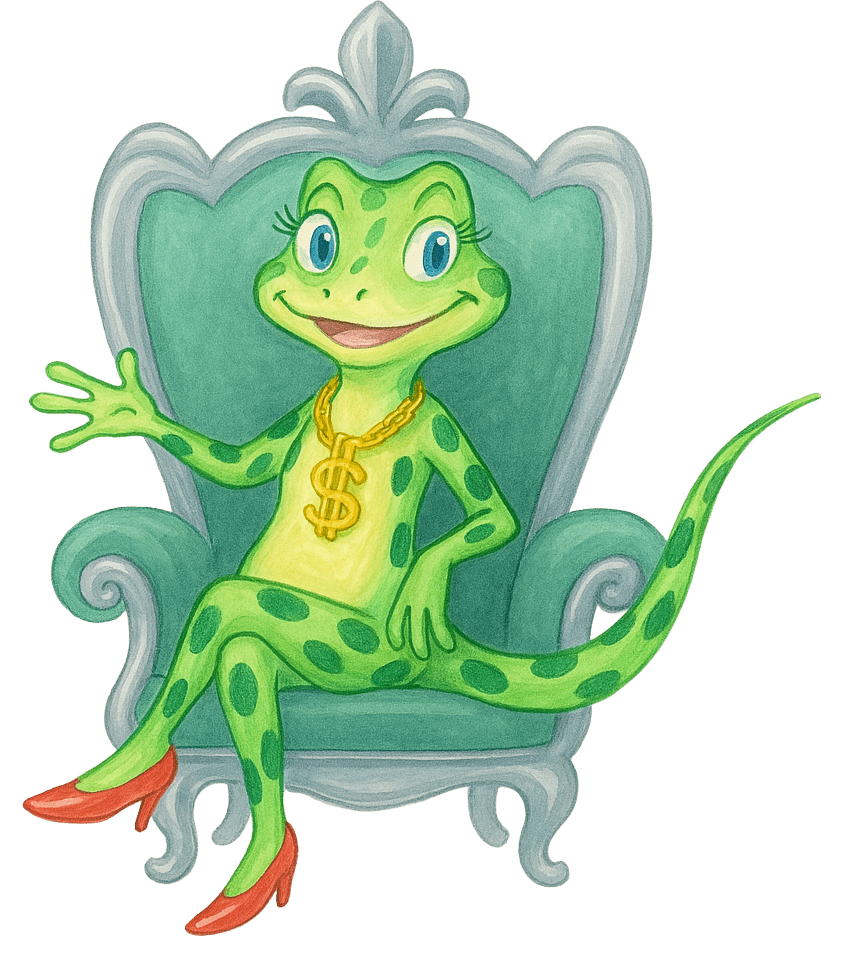
Lizzy is Hammie’s green-and-yellow gecko best friend from Bangkok, but she has a monumental secret. She is really Princess Gekkie, heir to the island’s ancient Gecko Kingdom. She fled her royal duties months ago to pursue her passion for dancing, but now she’s ready to come home. Spirited, deeply loyal, and famous for her mozzie burgers, Lizzy comes to terms with her past while bravely fighting to save her ailing parents and protect her people. She ultimately grows into the wise, fierce, and compassionate leader her island kingdom needs.
Psychological Traits and Emotional Complexities
Lizzy, known to Hammie as the bright greenish gecko from his apartment building, is in truth Princess Gekkie, heir to the gecko kingdom. At her heart burns a passionate, almost defiant love for dancing. When her royal parents refused to let her dance on the islands, she chose the unthinkable – leaving her home and island kingdom behind. Perhaps she was inspired by Prince Harry himself, whose decision to step away from royal life and begin anew in the U.S. showed the world that tradition doesn’t always come before happiness. Like him, Lizzy is fiercely independent, brave in following her heart, and unwilling to live a life defined solely by duty.
Her initial focus on her personal dream doesn’t make her selfish; rather, it shows her deep need to live authentically. Yet beneath that independent spirit lies a well of empathy. Her dismay at Gingga’s lizards neglect of the beaches and their plans to sell animals is instinctive. The simple act of picking up a plastic bottle speaks to her innate care for home and habitat. Her love for the islands runs deep, even after all her time away.
Lizzy’s confidence often radiates – her “nasty surprises” for mosquitoes, her proud declaration that “abandoning fishing nets will be illegal when I’m queen.” This boldness is the spark of a natural leader. But threaded through it is a quiet, very real vulnerability. When the King and Queen’s health falters and the ambergris (the potion) hunt becomes desperate, she paces, cries, and admits fear. That emotional openness is part of her strength; she feels so deeply because she cares so deeply.
Her playful, teasing side adds light to the story. When she jokes about Hammie eating her mozzie burgers and sandfly sandwiches, or flashes a cheeky grin, we glimpse the warm, mischievous girl beneath the princess. Yet at her core is resilience. Time and again she is knocked down by fear or doubt, only to stand back up with renewed determination.
One of her most relatable traits is her self-doubt — something even the bravest creatures quietly carry. “I feel like I’m pretending all the time,” she confesses, unsure if she can ever truly be a real princess, let alone become the queen. That honesty makes her growth all the more powerful: her leadership isn’t born of entitlement but earned through fear, failure, and courage.
Motivations and Core Values
Lizzy’s first great motivator is passion – the love of dancing that drives her to the city. That personal dream shapes her early choices. But when news of the lizards’ rise and her parents’ illness reaches her, everything shifts. Her motivation becomes survival: saving her family, her kingdom, and the magic of the islands themselves.
At her heart lies stewardship. She wants to protect the islands – their creatures, their balance with nature, their beauty. The moment she promises to make abandoned fishing nets illegal is more than policy; it’s her soul speaking.
Her core values are courage, care for community, and living authentically. By the story’s end, these values merge: she learns that to be a true princess, she doesn’t have to give up the dancer within – she must bring that joy and fire to her kingdom.
Strengths and Vulnerabilities
Lizzy’s strengths are varied and vibrant:
- Resourcefulness: Turning mozzies into burgers and sandflies into sandwiches, setting “mozzie traps,” and knowing how to treat jellyfish stings show practical ingenuity and quick thinking.
- Courage: Her immediate agreement to sail to Koh Tarutao despite danger cements her bravery and determination.
- Leadership Potential: Her vision for the future and willingness to act for the islands’ good, hint at a powerful, compassionate ruler in the making.
- Empathy: From comforting Goggles to sending food to her antagonist Gingga when he was gravely ill, Lizzy’s compassion extends even to those who have challenged her.
Lizzy’s vulnerabilities make her real:
- Emotional sensitivity: Tears and anxiety reveal how deeply she feels.
- Self-doubt: Her uncertainty about being “a real princess” and future queen is a central struggle.
- Isolation fragility: Though she appears bold and radiant, Lizzy’s need to hide her true identity and live apart from her family reveals a subtler vulnerability — the toll of living with secrets and longing.
- Emotional volatility: When they arrived at Koh And Thong and Gingga stormed them, snatching Hammie’s backpack with the smaller part of the magic potion, Lizzy burst into tears. Her immediate despair shows how quickly she can lose hope in moments of crisis, revealing a tender emotional fragility beneath her bold exterior.
Background and Influences
Lizzy’s royal upbringing gave her duty; her escape to the city gave her freedom. That time as a professional dancer in a Thai cultural show in Bangkok shaped her independence and creativity. It also gave her resilience – surviving away from home and carving out a life on her own terms.
Her bond with Hammie is the emotional heart of her story. As “Lizzy,” she is his quirky, beloved gecko friend, a bright piece of his city life. That pre-existing trust makes the revelation of her true identity all the more powerful. Their friendship is her anchor – proof that she is loved not for her crown but for herself.
Internal Conflicts and Growth
Lizzy’s journey is defined by two profound internal battles:
- Duty vs. Passion: Her exile is born of this tension, and her return resolves it not by choosing one over the other but by merging them – bringing the dancer’s joy into the princess’s duty.
- Self-Doubt vs. Leadership: Feeling like she’s “pretending all the time” contrasts with the real, decisive actions she takes. Through Goggles’ advice to “just be yourself” and the unwavering support of Hammie, she learns that true leadership is not about perfection but authenticity.
Her oscillation between hope and despair, courage and fear, makes her growth tangible. Every tear, every anxious moment, and every time she stands up again builds a princess forged not by birthright alone but by heart, humility, and choice.
Final Arc
By the end, Lizzy is no longer just the runaway dancer or the reluctant princess. She is both – a leader who brings joy, courage, and compassion to her kingdom. Her playful humour, deep empathy, and fierce determination mark her as a future queen who will protect the islands with wisdom and warmth.
Her story is not just about returning home; it’s about coming into herself.
Goggles, the spectacled langur monkey
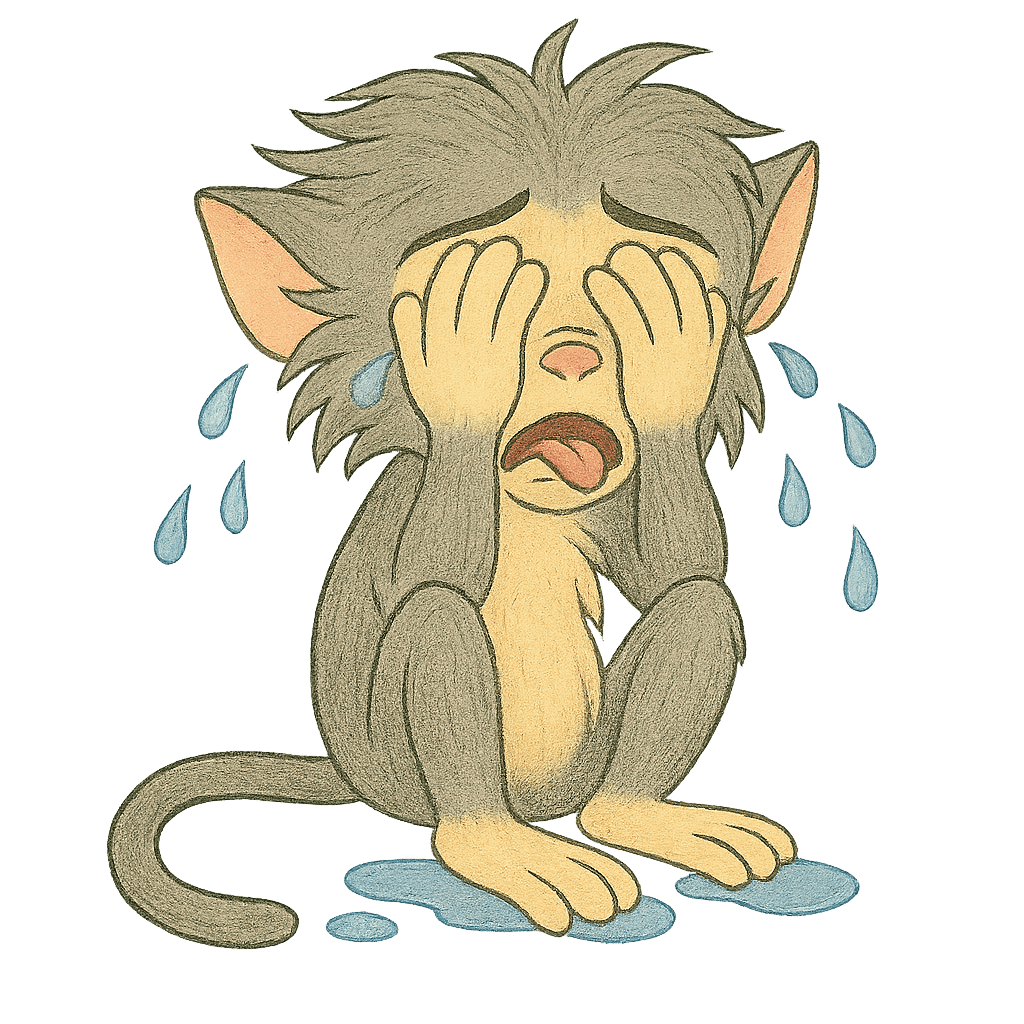
Hammie’s loyal friend on the island, a clever spectacled langur monkey with white eye-rings. Goggles is kind and incredibly resourceful, always offering assistance and wise guidance to all in the group during their challenging island adventures.
Psychological Traits and Emotional Complexities
Goggles, the spectacled langur with the wide, white-rimmed eyes, is the first bridge between Hammie and the magical world of the islands. Her curiosity defines her introduction; when her gaze locks onto Hammie, it is filled with wonder rather than fear. That first wave, followed by her cheerful greeting, sets the tone for who she is: welcoming, warm, and unafraid to connect.
At her core, Goggles is the embodiment of quiet loyalty and practical kindness. She is always there, watching as Hammie sets up his hammock and guiding him through the tests. Her helpfulness is never perfunctory; it comes from a place of genuine care.
Yet beneath her cheerful exterior runs a current of anxiety. When the mosquito army attacks, she waves frantically, her fear barely contained. When the King and Queen’s health declines, she buries her head in her hands and cries. Goggles feels everything deeply, and her worry is as honest as her hope. What makes her compelling is not fearlessness but her ability to act despite her fear.
Her playful side shines in lighter moments. Calling Chakrit “Hammie Boy,” teasing him about his hammock obsession, or smirking at Lekkie’s fear of water brings levity when the stakes are high. This playfulness is not just comic relief – it reflects her way of keeping spirits alive for those around her, even when she herself is scared.
Resourcefulness runs through her character. She suggests using her headband as a blindfold, instantly catches on to Zippy’s coconut-shell idea to catch sandflies, and adapts quickly to changing situations. Her practicality and ability to improvise make her indispensable.
At her core, Goggles is defined by deep loyalty – to the island’s royal family, to her friends, and to the islands themselves. Her sense of belonging is woven into her every action. When she says, “…we all belong to the islands,” it isn’t just a statement; it’s a piece of her soul.
Motivations and Core Values
Goggles’ central motivation is protecting her home and saving the Gecko Kingdom. Finding Princess Gekkie, and later the magic potion to heal the King and Queen, becomes her entire focus.
Her values are rooted in community and stewardship. Her outrage at the lizards’ behaviour – selling animals as pets, neglecting the beaches – stems from her belief that the islands are a shared home, a living, breathing entity that must be protected. Her loyalty to her monkey family and the wider animal community drives her every step.
The fear of losing the “magic of the islands” is her greatest motivator. It’s not just about saving her leaders; it’s about saving the essence of the small world she loves.
Strengths and Vulnerabilities
Goggles’ strengths:
- Agility and skill: As a spectacled langur, her climbing and movement are vital assets during the tests and the ambergris hunt.
- Supportive leadership: She organises teams, keeps morale up, and guides others naturally.
- Quick thinking: Her fast adaptation to the sandfly problem and creative use of tools highlight her problem-solving ability.
- Emotional resilience: Though she falls into moments of fear or despair, she consistently recovers and pushes forward.
Goggles’ vulnerabilities:
- Physical fragility: The jellyfish sting and mosquito army attacks show her limits; she is agile but not built for brute force.
- Emotional sensitivity: Her tears for the missing princess, despair at the King and Queen’s illness, and visible worry mark her as deeply empathetic but emotionally exposed.
- Dependence on others for strength tasks: She relies on Hammie or Mama Ruth for heavy physical work, which highlights her teamwork but also her physical limits.
Background and Influences
As a spectacled langur native to Koh Wua Ta Lap (island), Goggles is intimately tied to the land. Her knowledge of the islands and their stories runs deep, and her family connections stretch all the way to Koh Tarutao on the other side of Thailand, widening her network and sense of belonging.
Her awareness of the old stories about jealous lizards and snakes gives her a grounded understanding of the dangers they face. This mix of folklore and lived experience makes her both cautious and prepared.
Her role as the first animal to speak to Hammie is not incidental – it defines her as a connector. She is the one who bridges the gap between outsider and community, between city boy and island magic.
Internal Conflicts and Growth
Goggles’ key internal conflict is between fear and duty. Her anxiety in the face of threats is real and relatable. But her sense of responsibility – to her royal family, her friends, and the islands – always wins. Watching her push past her fear repeatedly is where her quiet heroism lies.
She also oscillates between hope and despair throughout the story. The stolen ambergris, the failing King and Queen, the jellyfish stings, the mosquito and sandfly swarms – each knocks her down, but her ability to recover is where her growth shines. She moves from anxious helper to confident leader, gradually taking a more active role in decision-making and strategy.
By the end, Goggles emerges as more than a sidekick or helper. She becomes a symbol of everyday courage: a loyal friend, a steady guide, and a heart that never stops fighting for her home. Her playful teasing, quick thinking, and unwavering love for her islands make her one of the emotional anchors of the story.
Final Arc
By the end, Goggles grows from the anxious, overthinking monkey into a steady source of loyalty and quiet courage. Her nervous chatter hides a heart willing to risk everything for her friends, and when the stakes are highest, she proves that bravery isn’t the absence of fear – it’s choosing to stand firm despite it.
Goggles’ journey shows that even the most hesitant voices can become the strongest anchors when friendship and love are on the line.
Lekkie, the leech
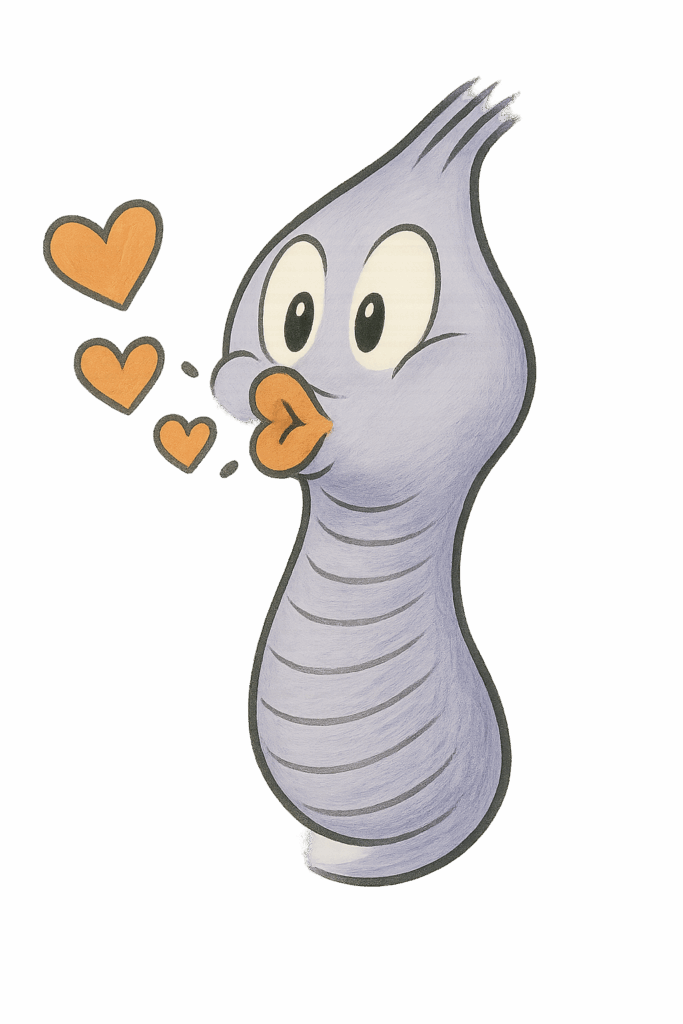
A leech with a giant personality, Lekkie is brave and fearless, especially against mosquito leader Sting. His humorous boasts hide a loyal heart, and his leech slime is essential to help save Goggles from a life-threatening jellyfish sting.
Psychological Traits and Emotional Complexities
Lekkie, the boisterous leech with a talent for tall tales, is equal parts comic relief and unexpected hero. His exaggerated claims – “the bravest leech in all of Thailand,” his grandmother making a whale pass out, his supposed ability (or rather, imagination) to tickle a shark until it spits him out – are delivered with such conviction they almost sound true and believable. Beneath the bravado, though, lies a small creature who desperately wants to be seen as important and brave in a world much bigger than himself.
Humour is his shield and his gift. His witty remarks, “mozzie burger” threats shouted at Sting, and exaggerated gestures keep the group smiling even in moments of danger. His teasing of Hammie, Dolly’s singing, and his cheeky comments to Lizzy reveal a playful, irreverent side that balances the story’s heavier moments.
But under the humour is vulnerability. Lekkie’s bravado often masks fear – of water, of heights, of the unknown. His squeaks when Billy takes him flying, his emphatic “I don’t like water and I can’t even swim!” and his initial scoffing at the sandflies reveal a creature who is, at heart, nervous about his own limits.
Perhaps the clearest example is when he trembles at the thought of salt being sprinkled on his belly to produce healing slime to save Goggles’ life — terrified that too much salt could dry him out completely, yet still agreeing to do it. It’s precisely this mix of fear and loyalty that makes his courage shine when it really matters.
Lekkie is fiercely protective of his friends. His loyalty to Hammie and Lizzy runs deep, and his line, “You’re my friend, so I won’t suck any blood from you. Well, not without asking first,” perfectly captures his blend of humour and devotion. Beneath the jokes, there is a leech with a big heart.
Motivations and Core Values
At first glance, Lekkie’s motivations seem simple: self-preservation and the desire to be admired. His fear of water, reluctance to use his healing slime, and constant boasting, all point to someone trying to survive and be noticed. But deeper down, his motivation is love – for his friends and for the islands. When danger truly hits, his sense of duty outweighs his fear.
His boasting also hints at a core value: wanting to live up to something bigger than himself. In his own way, he wants to be heroic, not just for recognition but because he knows the mission matters. His loyalty and willingness to face dangers for Hammie and Lizzy show that when it counts, friendship is his true compass.
Strengths and Vulnerabilities
Lekkie’s strengths:
- Courage when it counts: His bravado may be loud, but his true bravery is quiet and real, seen in moments like sliding towards the “crocodile” in the cave.
- Loyalty: His unwavering support for Hammie and Lizzy grounds him as more than comic relief.
- Humour: His jokes and absurd stories keep morale high and the group bonded.
- Unique abilities: His “mosquito language” and healing slime, though reluctantly offered, are life-saving tools.
- Observation: Despite the jokes, he’s sharp – he hears the mosquito hum before anyone else and quickly identifies Sting.
Lekkie’s vulnerabilities:
- Fear of water: His aversion is both comedic and real, limiting him in critical moments.
- Physical smallness: As a leech, he relies on wit and friends for protection.
- Underlying insecurity: His boasting hides a small creature afraid of being insignificant.
- Fear of heights and the unknown: His protests with Billy and his reaction to the octopus reveal a tendency to panic before regaining courage.
Background and Influences
Lekkie claims to have lived on the islands his “whole life,” and whether every story he tells is true or not, his knowledge of the islands and their creatures is genuine. His colourful family history – especially the legendary “big momma leech” grandmother – feeds his sense of identity and imagined heroism. This blend of fact and embellishment creates a character who straddles reality and myth in a way that makes him endearing.
His understanding of the jungle’s dangers, combined with his ability to make light of them, shapes him into both a guide and a jester – the heart of the group’s humour and often, surprisingly, its courage.
Internal Conflicts and Growth
Lekkie’s central conflict is between fear and loyalty. His aversion to water and salt, and hesitation in dangerous situations clash with his fierce love for his friends. This tension creates some of the story’s most memorable moments, as he pushes past his limits when they need him most.
Another conflict runs between his boasting and reality. His constant claims of bravery are often ahead of his actions, but through the story, he grows into them. The Crocodile Cave scene, where his “bravery” finally meets a real test, is a turning point. Mama Ruth’s approving nod isn’t just comic – it’s the first time someone sees past the bravado and recognises the real courage underneath.
Final Arc
By the end of the story, Lekkie finds pride not just in his exaggerated stories but in his true contributions. Whether it’s being dubbed “Doctor Slimy” or saving Goggles with his healing slime, he earns his place as both the comic heart and a genuine hero of the group.
Lekkie’s journey is one of quiet bravery hiding behind loud jokes. He begins as the boastful leech whose claims far outshine his courage and ends as a friend who proves himself when it matters most. His humour, loyalty, and hidden heart make him not just comic relief but a vital emotional thread of the story.
In a world of kings, queens, and magic potions, it’s the “bravest leech in all of Thailand” – small, scared, and full of love who reminds us that true courage isn’t the absence of fear, but acting despite it.
Billy, the hornbill
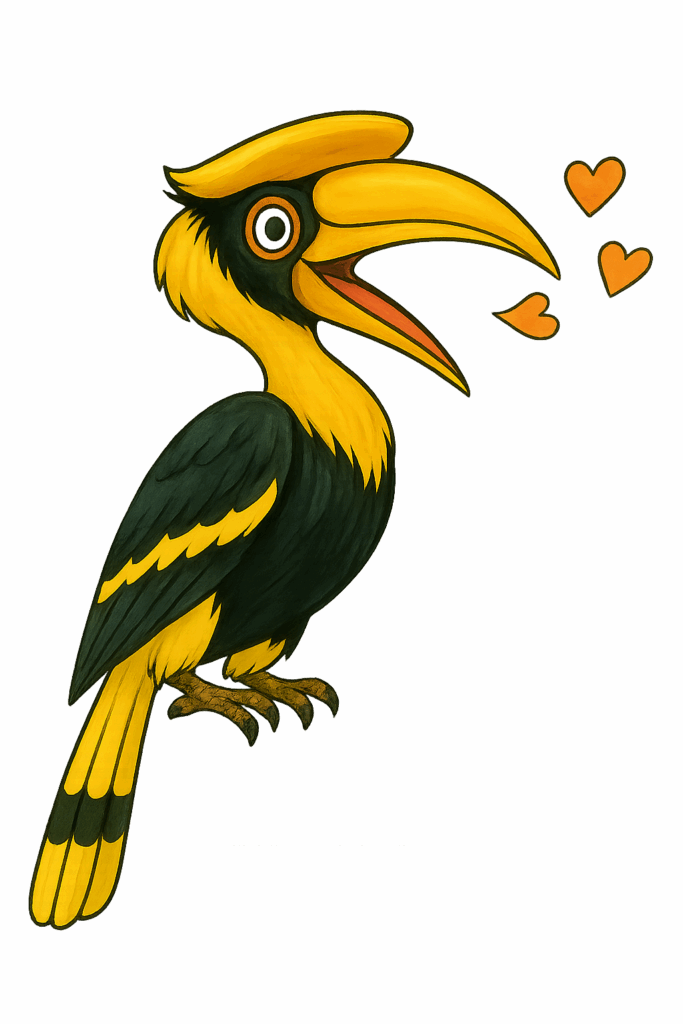
Billy is the chief messenger for the Hornbill News Network, carrying messages and important updates about the ailing King and Queen. He plays a vital role in the quest when he safely hides the precious magical potion.
Psychological Traits and Emotional Complexities
Billy, the hornbill with the confident swoop and quick wit, is the story’s steadfast messenger and one of its quiet heroes. He embodies loyalty: whenever there is urgent news or a critical task, Billy is there without hesitation, a winged constant in the group’s chaotic journey. His reliability makes him the invisible thread holding many parts of the mission together.
Bravery comes naturally to Billy. When he slices through a storm to deliver news of the King and Queen’s worsening health, or casually offers to take a trembling Lekkie high above a “giant octopus,” it isn’t showmanship – it’s duty combined with courage. His playful boast about the “Hornbill News Network” hints at pride not just in himself but in his entire species’ role in keeping the islands safe and well connected.
Billy’s keen perception is one of his most valuable traits. From spotting Gingga’s return to Emerald Island to finding the ambergris cave, his watchful eyes often shift the story at crucial moments. His playful side balances his seriousness – the cheeky wink at Hammie, the gentle teasing of Lekkie’s water fear – all reveal a bird who understands the importance of lightness even in heavy times. But when the situation demands gravity, Billy’s tone changes; his reports on the King and Queen or the lizard threat carry weight, showing he knows when to set aside humour for duty.
At his heart, Billy is a blend of sharp instinct, loyalty, and quiet strength. He doesn’t seek glory, but his presence becomes indispensable to the team and the islands’ survival.
Motivations and Core Values
Billy’s driving force is protection – of the Gecko Royals, of the islands, and of the balance they represent. His loyalty to the King and Queen, and later to Princess Gekkie (Lizzy) and Hammie, runs deep. More than just a messenger, he sees himself as a guardian of information and connection; his role ensures that everyone’s efforts align towards the same goal.
His core values are duty, community, and courage. He believes in the collective over the individual, understanding that survival depends on everyone playing their part. His repeated willingness to face danger without hesitation underscores a quiet but profound sense of responsibility.
Strengths and Vulnerabilities
Billy’s strengths:
- Flight and speed: His ability to cover great distances quickly makes him the team’s lifeline for information and coordination.
- Keen eyesight: His aerial perspective allows him to spot threats, paths, and hidden locations vital to the mission.
- Courage: Whether in storms, near enemies, or in unknown terrain, Billy never falters.
- Resourcefulness: His quick guidance through narrow jungle gaps and instinctive problem-solving make him invaluable.
- Supportive nature: He consistently reassures, encourages, and aids Hammie and the team, offering both practical help and emotional steadiness.
Billy’s vulnerabilities:
Billy is portrayed as consistently strong and capable with few explicit weaknesses. If anything, his sense of duty can border on self-sacrifice, throwing himself into risk without pause. His role as the “reliable one” may also mask a quiet burden: carrying everyone’s messages and fears while never faltering himself.
Background and Influences
Billy is part of a larger community of hornbills and serves as the head (possibly even the CEO) of the self-proclaimed “Hornbill News Network.” This network gives him structure, a sense of identity, and a mission beyond himself. His uncle on Koh Tarutao expands his world, connecting him to key knowledge like the magic potion’s existence and even sending an urgent warning, via the Hornbill News Network, to be on the lookout for a massive octopus that fishermen had reported in the area. His natural environment as an aerial scout has honed his instincts for navigation, observation, and rapid response, shaping him into the perfect messenger and guardian.
Internal Conflicts and Growth
Billy’s arc is less about personal doubt and more about deepening his role as the team’s backbone. While he begins the story already capable and reliable, his repeated flights into danger, his unflinching presence in crises, and his careful balance of humour and seriousness cement him as more than a messenger. He becomes a symbol of constancy and courage.
If there is an internal tension, it is subtle: the quiet weight of being “the one who always delivers.” The story hints that behind the confident boasts and playful winks lies a character who carries the responsibility of connection, knowing that one missed message could mean disaster. His growth is not about becoming brave but about embodying a deeper trust in himself, in his friends, and in the community he serves.
Final Arc
To the very last moment, Billy stands as a quiet hero. He never seeks the spotlight, yet his loyalty, sharp instincts, and unwavering presence make him a cornerstone of the team’s success. His playful humour keeps spirits high, while his courage in storms and battles reminds everyone that true strength often comes without fanfare.
Billy isn’t just the “Hornbill News Network”. He’s the voice that keeps hope alive and the wings that hold the islands together.
Captain Somtam, the Thai boatman
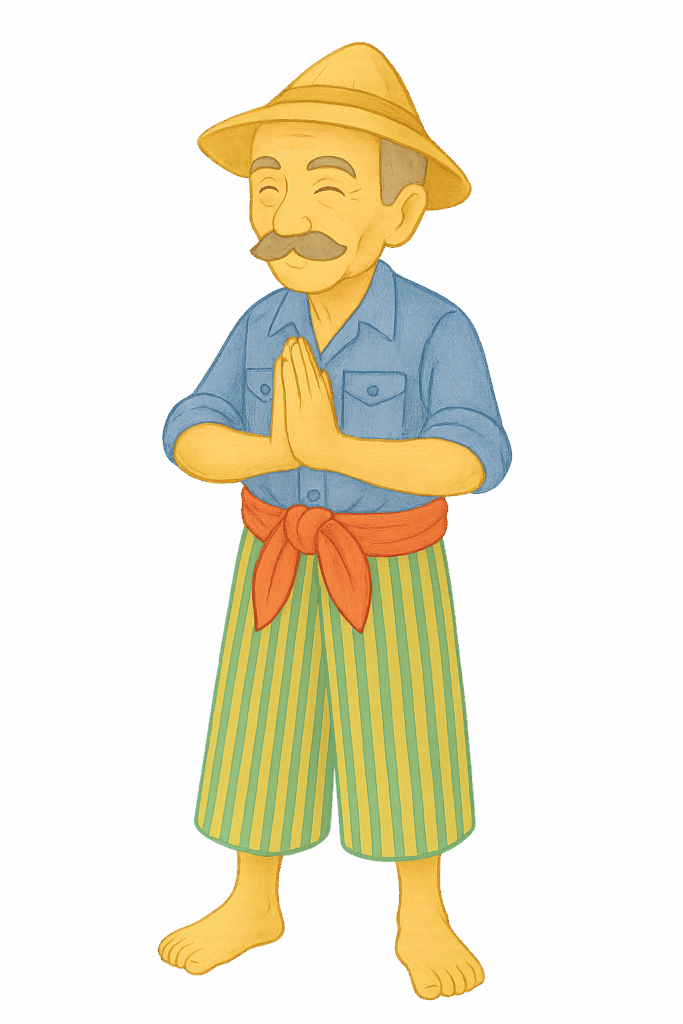
The kind, skilled, and wise captain of the longtail boat “Sawasdee”, Captain Somtam patiently and expertly sails Hammie and his friends through the treacherous Thai seas on their quest, giving them practical help and advice.
Psychological Traits and Emotional Complexities
Captain Somtam is the sea, personified: calm, powerful, and full of quiet wisdom. His skill as a seafarer is legendary; he steers the Sawasdee (his longtail boat) with effortless mastery, reading every wave, every gust of wind, every hidden reef as though they are old friends. This expertise creates a sense of safety around him.
When Lizzy worries about the journey, he firmly tells her, “No sea voyage is without danger, Princess,” but then immediately offers his unwavering and gentle reassurance: “Please do not worry. I will take good care of you, and the Sawasdee will be your home while we travel.” He reflects not just professionalism, but genuine care.
His calm under pressure is a defining trait. When storms hit, with strong winds and towering waves, he doesn’t panic; his voice remains steady, instructing everyone to “stay calm” while skilfully steering them to safety. This ability to manage crisis with composure makes him a natural leader and protector.
Captain Somtam is also deeply observant and attuned to the natural world. He notices the unusual number of jellyfish and immediately connects it to global warming, demonstrating an awareness of environmental change beyond the surface level. His knowledge extends into lore and culture – from the ancient “nang-ngueak” mermaids as water guardians to the sustainable practices of the Moken people. His words carry quiet weight: “The sea teaches many lessons” and “Danger always comes from where you aren’t looking”. These aren’t just lines of dialogue but philosophies born from a lifetime on the ocean.
Despite his authority, Somtam is warm and welcoming. His wide smile when greeting Hammie and the others aboard the Sawasdee sets a tone of trust and friendship. His humour is understated but present in his interactions, softening his wisdom with approachability.
Beneath his competence lies a quiet reverence for the sea. He carries himself not as someone who conquers the ocean, but as one who listens to and learns from it. That humility is what makes him more than just a skilled captain: It makes him a spiritual guide on water.
Motivations and Core Values
Captain Somtam’s main motivation is simple yet profound: to protect and guide those in his care across the unpredictable sea. This is not just a job to him but a calling. His repeated reassurances and careful actions show that he sees their safety as a personal responsibility.
His respect for nature and the ocean underpins everything he does. His admiration for the Moken – “They respect the ocean, taking only what they need” – reveals his core value of living in balance with nature rather than exploiting it. His comments on global warming and shifting sea patterns show his awareness of the ocean’s fragility and his desire to preserve it.
Duty, stewardship, and humility are his guiding principles. To him, the Sawasdee isn’t just a boat; it’s a vessel of trust carrying lives and stories across a living, breathing sea.
Strengths and Vulnerabilities
Captain Somtam’s strengths:
- Expert seamanship: His skill in navigating waves, winds, and reefs makes him invaluable.
- Calm leadership: His ability to stay composed in storms, attacks, and crises anchors everyone else.
- Wisdom and observation: His insights into the sea, nature, and human behaviour bring depth and guidance to the group.
- Resourcefulness: His preparedness, such as carrying salt that saves Goggles, shows practical foresight.
- Cultural knowledge: His understanding of Moken traditions and local lore connects the story to a deeper cultural context.
Captain Somtam’s vulnerabilities:
Captain Somtam is portrayed as almost unwavering, with few explicit weaknesses. His humanity is revealed in small ways. The quiet seriousness in his voice when danger approaches and the subtle weight in his words about the sea’s mysteries. His vulnerability lies not in skill but in his deep sense of responsibility: the unspoken burden of knowing that every life aboard his boat depends on him.
Background and Influences
A seasoned boat captain from southern Thailand, Somtam’s life is entwined with the sea. His years navigating these specific waters, learning every current and reef, have made him not just a sailor but a student of the ocean. His experience with the Moken – including travelling on their kabang (boat) – has given him profound respect for their intimate connection to the sea and shaped his own philosophy of balance and stewardship.
His familiarity with the islands and their stories suggests a man rooted in local history and culture. This background, combined with his life at sea, has instilled in him both practical skill and quiet spiritual depth.
Internal Conflicts and Growth
Captain Somtam’s role is less about personal transformation and more about being a steady, guiding force. He begins the story as calm, capable, and wise and remains so to the end. His arc is not about change but about consistency: proving through every storm, every crisis, that reliability and quiet strength are forms of heroism in their own right.
If he has an internal tension, it’s the weight of responsibility. His calm words and easy smile may mask the quiet knowledge that one mistake at sea can cost lives. His growth comes not through becoming braver or wiser, but through deepening his role as protector and teacher, leaving Hammie and the others with lessons they’ll carry long after the Sawasdee docks.
Final Arc
Captain Somtam is the story’s anchor on water – a man whose steady hands and wise words carry the group through peril. His mix of skill, calm, and reverence for the sea makes him more than a captain; he’s a bridge between human ambition and nature’s vast, untameable spirit.
Through him, the story reminds us that guidance doesn’t always come with fanfare – sometimes it comes in the form of a calm voice saying, “Stay calm. The sea teaches many lessons.”
Gingga, the lizard
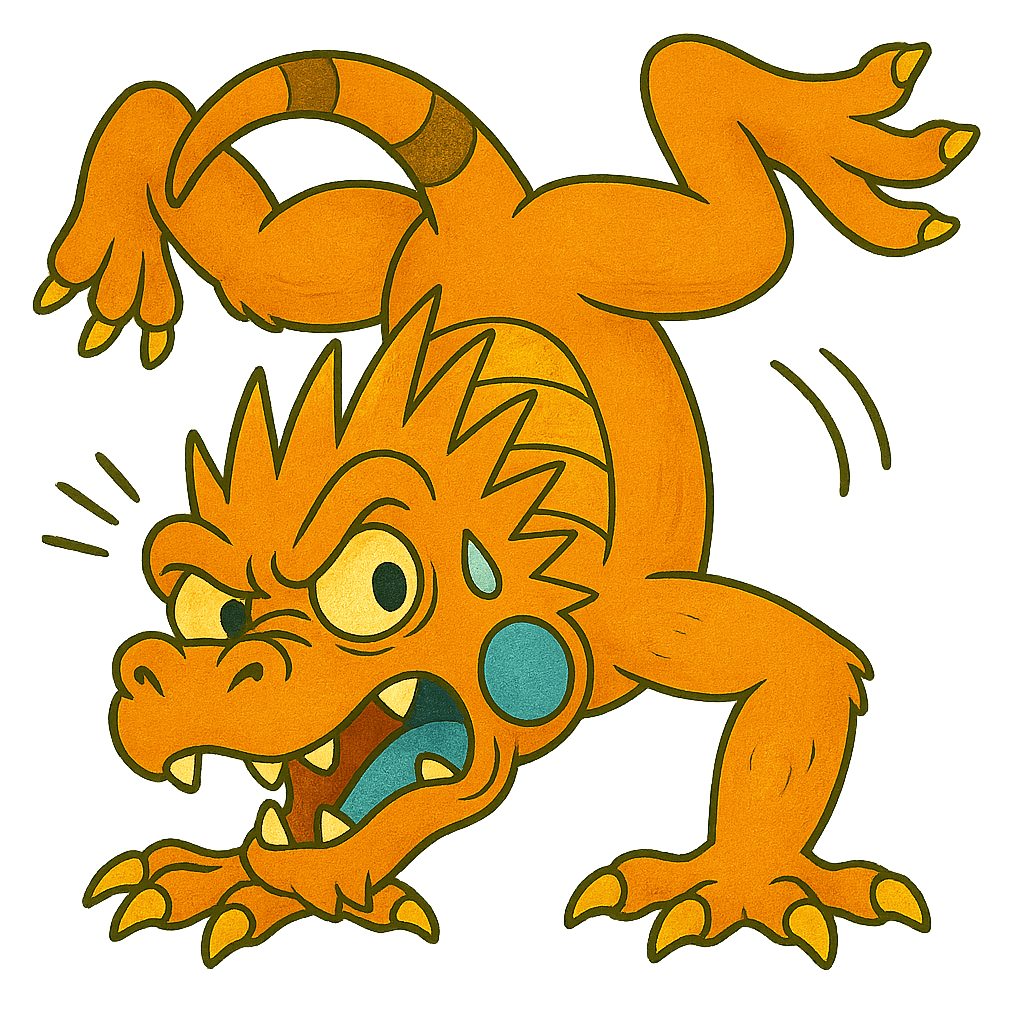
The nasty, power-hungry leader of the evil lizards, Gingga plots to rule the islands. He dislikes the geckos and causes trouble for everyone. But when he tries to steal the magic potion for his destructive plans, he is cleverly outsmarted.
Psychological Traits and Emotional Complexities
Gingga, the leader of the island’s lizards, enters the story cloaked in menace. Hammie’s first impression – “He looked mean and nasty” – is no exaggeration. His presence is unsettling, his movements stealthy; he spies from trees, watches at night, and lurks in the shadows. Gingga’s cunning and secrecy paint him as a predator not just in body but in mind.
At his surface, he embodies cruelty and ambition. His plan to sell the island’s animals for profit, his disdain for cleaning the beaches, and his willingness to let the King and Queen die to seize power mark him as exploitative and ruthless. His arrogant belief that the princess is “weak” shows a character consumed by his own plans.
Yet under the layers of arrogance is a flicker of something deeper – a resentment born of neglect. His bitter remark, “No one ever thanks us for keeping unwanted visitors away,” hints at a lizard who, once upon a time, wanted acknowledgment and respect but found none. That absence festers into malice and ambition, turning what could have been loyalty into a warped hunger for control.
Even his rare moment of gratitude – a reluctant, muttered “Thank you, Liz” when given mozzie burgers – shows a crack in the armour. Gingga is unpleasant to his core, but not entirely without the capacity for recognition or perhaps shame.
Motivations and Core Values
Gingga’s driving force is power. His overarching goal to “rule the islands” defines nearly every action. He sees the gecko royals’ illness as an opportunity and moves to exploit it without hesitation. His desire to sell animals and strip the islands of their magic reflects a value system centred entirely on control and gain.
Beneath the ambition, though, lies a more tragic motivator: the need for acknowledgment. His bitterness about being unthanked suggests that at some point his role as “protector” curdled into tyranny because no one saw him or his lizards as worthy. His malice is the shadow of a creature who once wanted belonging but instead embraced domination.
Strengths and Vulnerabilities
Gingga’s strengths:
- Leadership: He commands an army of lizards and aligns with Sting’s mosquito army, wielding influence through fear and strategy.
- Stealth and cunning: His spying, ambushes, and ability to remain hidden for long periods make him a constant, unseen threat.
- Determination: “Too determined to be stopped” – his persistence is one of his defining strengths.
- Strategic thinking: From using mosquitoes as deterrents to orchestrating an ambush to steal the magic potion, Gingga demonstrates foresight and planning.
Gingga’s vulnerabilities:
- Susceptibility to the potion: His ambition literally becomes his downfall, as the stolen potion sickens and weakens him, ending his threat.
- Overconfidence: His belief that time and circumstance guarantee his victory blinds him to Lizzy’s intelligence and Hammie’s courage.
- Fear of true power: Lekkie’s threats about Lizzy turning his mosquito army into “mozzie burgers” hit a nerve, hinting at a deeper fear of her rightful authority.
- Need for recognition: His resentment over being unacknowledged is both a flaw and a tragic undercurrent, making him more than a one-note villain.
Background and Influences
Gingga’s name – echoing the Thai word for “lizard” – roots him in the cultural and environmental fabric of the islands. His long-term hiding and persistent attempts to overthrow the gecko royals suggest a cycle of conflict stretching back years. His history is one of waiting, watching, and seizing opportunity, which shapes his patience.
His bitterness hints at a time when the lizards saw themselves as guardians of the islands, their efforts unrecognised. Whether this is truth or self-justification is left unsaid, but it gives him depth: Gingga is not evil for evil’s sake but a creature whose perceived injustice has turned corrosive.
Internal Conflicts and Growth
While much of Gingga’s story is defined by ambition and cruelty, his offhand comment about never being thanked exposes a crack in the armour. The possibility that his hunger for power masks a deeper longing to matter. That internal conflict, though never fully explored, colours his character with shades beyond simple villainy.
His “growth” is less chosen than forced. The potion’s effects neutralise his threat and leave him with no choice but to yield to gecko rule. The King’s offer to “fight alone and powerless, or stand beside them to protect the islands” doesn’t redeem him, but it plants the seed of cooperation or at least surrender. His scowl remains, but his ambition is checked – not by moral awakening, but by the consequences of his own greed.
Final Arc
Gingga is the story’s shadow: cunning, ambitious, and cruel. Yet beneath the nastiness lies the faint outline of a creature who wanted recognition and twisted it into domination. His downfall is poetic – brought low not by force but by his own overreaching.
He ends not redeemed but subdued, a reminder that villains are often born not just from greed but from the ache of being unseen. Through Gingga, the story hints that even the “evil lizard” once wanted to belong.
Sting, the mosquito

Sting is a terrifying giant mosquito. With his long, sharp stinger and buzzing mozzie army, he tries to stop Hammie and the others from helping the King and Queen. Lekkie comically claims that Sting is absolutely terrified of him.
Psychological Traits and Emotional Complexities
Sting is introduced as the “menacing chief” of the mosquito army, a buzzing shadow over the protagonists’ quest. His thick swarms, relentless attacks, and alignment with Gingga mark him as a significant obstacle. Yet, beneath the ferocity lies a surprising fragility: Lekkie’s casual jab calling him a “big crybaby” hints at a character built on bluster rather than true menace.
This duality defines Sting. Outwardly, he projects dominance and control, commanding his mozzie army with sharp precision. Internally, he is riddled with insecurity, his fear of Lekkie and the infamous “mozzie burgers” betraying a vulnerability he cannot hide. This contrast makes him less a pure villain and more a creature scrambling to hold power in a world where fear often outweighs strength.
Motivations and Core Values
Sting’s primary motivation is survival through alliance. His loyalty to Gingga and the evil lizards is not born from shared ideals as much as necessity – aligning with the stronger force to secure his own army’s place. His explicit goal of stopping anyone from passing the three tests to reach the King and Queen reflects this duty as Gingga’s enforcer.
His value system is pragmatic: loyalty to those in power, strength through numbers, and self-preservation. Beneath the menace lies a leader whose decisions are driven less by malice and more by the instinct to protect his army and avoid the terror of another “mozzie burger” massacre.
Strengths and Vulnerabilities
Sting’s strengths:
- Leadership: Commands a vast, coordinated mosquito army capable of overwhelming opponents with sheer numbers.
- Tactical nuisance: His mosquitoes create chaos, fatigue, and distraction, making him a formidable obstacle in the tests Hammie must complete before being allowed to meet the King and Queen.
- Allegiance to Gingga: His alignment with Gingga and his lizards provides structure and mutual benefit.
Sting’s vulnerabilities:
- Fear of Lekkie: Lekkie’s threats shouted in “mosquito language” undo Sting’s menace, turning the hunter into the hunted.
- Trauma: The previous loss of his army to Lizzy’s “mozzie burgers” leaves a deep scar, fuelling his crybaby reputation.
- Inability to swim: A critical weakness that limits his reach and makes water a natural defence against him. As Billy noted: “Besides, mosquitoes can’t swim, can they? Not even the big, scary ones.”
- Lizzy’s traps: The “nasty surprises” and mozzie traps across the islands keep him in a constant state of fear, undermining his confidence.
Background and Influences
Sting’s past defines his present. As the leader of the mosquitoes and ally to Gingga, his identity is built on survival through alliance. The infamous event where Lizzy turned “nearly all of Sting’s army into delicious mozzie burgers” is the cornerstone of his fear and his exaggerated menace. It shaped his relationship with both Lizzy and Lekkie, making him hyper-aware of his vulnerability and desperate to project strength to mask it.
His crybaby nature is not weakness in itself but the scar tissue of a leader who has seen his army decimated and will do anything to avoid repeating that trauma.
Internal Conflicts and Growth
Sting’s core conflict is between the mask of menace he projects and the fear that defines him. He roars, but inside, he trembles. His loyalty to Gingga is less devotion and more survival instinct, and every encounter with Lekkie or Lizzy cracks the mask further.
His lack of true growth makes him a static but effective antagonist. He does not learn or redeem; instead, his story serves as a cautionary tale of fear disguised as power. His downfall is not the result of external defeat alone but of his own insecurities turning into weaknesses that the protagonists exploit.
Final Arc
Sting begins as a buzzing nightmare and ends as a deflated threat. His menacing aura dissolves under the weight of fear and memory, reminding us that even the loudest villains can be built on trembling foundations.
Through Sting, the story explores a subtle truth: that what seems terrifying is often just bluster hiding deep insecurity and that sometimes the smallest threats are undone not by force but by confronting the fear they try so hard to conceal.
Mama Ruth, the wild boar
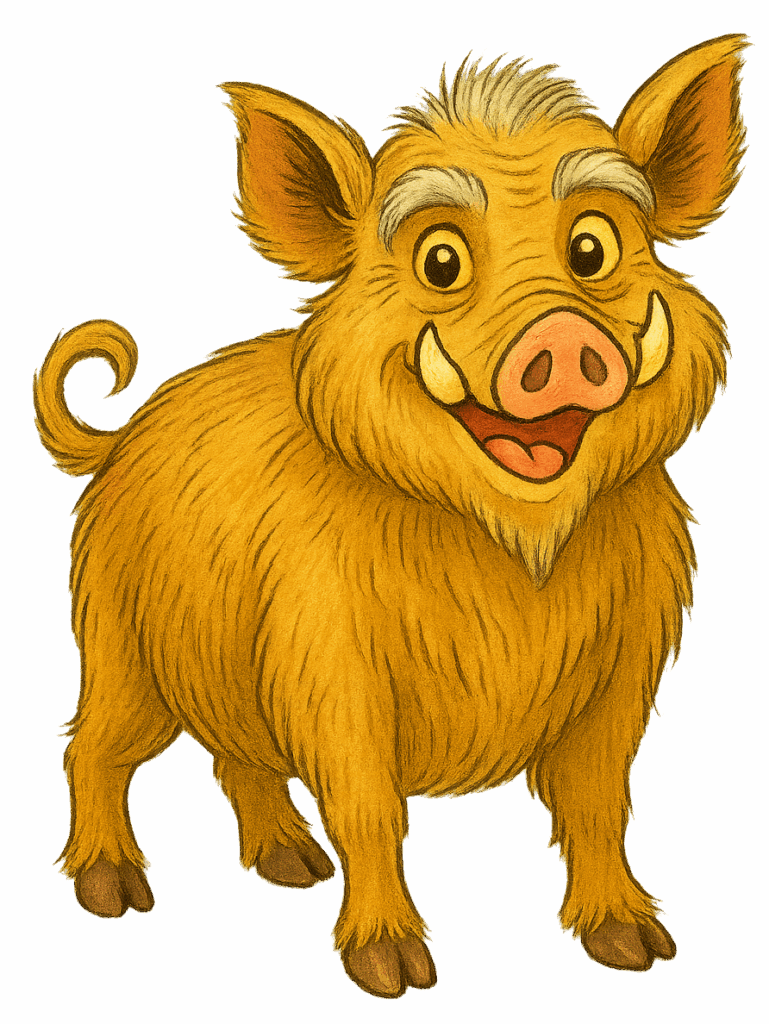
The wise, respected, and formidable leader of Koh Tarutao’s wild boars, Mama Ruth knows all about island history, ancient legends, and the mysterious Moken people. She gently guides Hammie’s group in their quest to find the potion.
Psychological Traits and Emotional Complexities
Mama Ruth, the wise wild boar of Koh Tarutao, is a character who radiates steadiness and quiet strength. She carries the weight of generations in her sturdy frame, her family’s long quest for the magic potion etched into every gesture. Her pride in her family’s work is humble but profound; when she gestures with her snout at the countless holes they’ve dug, there’s no bitterness, only quiet dedication. It speaks of a life defined by persistence and service to something larger than herself.
She is the story’s voice of experience – practical, grounded, and deeply connected to both the land and its history. Her insights into the Moken, the prison island, and the ocean’s moods reveal a character who listens to the world as much as she acts within it. Her observation of the mouse deer as a “good omen” showcases this connection to nature’s signs, blending practicality with a touch of spiritual wisdom.
Mama Ruth balances her gravitas with warmth and humour. She encourages Hammie and Lizzy when their spirits falter and laughs heartily at Lekkie’s boasts, her chuckle carrying both amusement and affection. Her laughter at the “surprisingly good” sandfly sandwiches reminds us that beneath the wisdom is a character who delights in life’s absurdities.
Though gentle, she can be firm when needed. Her no-nonsense instruction to Zippy not to complain, or her blunt admission that she “won’t be able to help with the climb,” show a character unafraid of honesty. She leads not with force but with calm authority, earning respect by embodying it.
Motivations and Core Values
Mama Ruth’s motivations are both personal and generational. She is driven to protect the islands, the animals, and the gecko royals whose rule sustains balance. Her commitment to finding the magic potion isn’t just for her lifetime – it’s the continuation of a family mission stretching back generations.
Her values are rooted in community, stewardship, and perseverance. She embodies the belief that safeguarding the islands is a duty passed through bloodlines and lived through actions, not words. Her respect for the Moken and their sustainable ways underscores her alignment with living in harmony with nature rather than dominating it.
Strengths and Vulnerabilities
Mama Ruth’s strengths:
- Wisdom and experience: Her knowledge of the islands’ history, terrain, and cultures make her a living archive and a guide.
- Leadership: Her family’s obedience and the respect of other animals highlight her natural authority.
- Physical ability: Her digging skills and ability to leap to the cave-landing show agility and strength despite her size.
- Resilience: Years of searching without success have not broken her spirit, making her a model of perseverance.
- Connection to nature: Her ability to read omens and her strong sense of smell (useful for sniffing out ambergris) root her in the environment in a way others can’t replicate.
Mama Ruth’s vulnerabilities:
- Physical limitations: Her inability to climb restricts her role in certain moments, highlighting the reality of age and physical boundaries.
- Emotional investment: Her deep care for the islands and the royal geckos makes her susceptible to despair when setbacks hit. Her strength is emotional as much as physical, and cracks appear when hope dims.
Background and Influences
Mama Ruth’s roots are as deep as the mangroves. A long-time inhabitant of Koh Tarutao, she knows every curve of its terrain and every whisper of its history. Her ancestors’ relentless search for the potion has shaped her identity; she is both an individual and a vessel for a generational mission.
Her connection to the Moken adds cultural depth. The story of showing them where to find fresh water speaks to a life spent building bridges between species and communities, embodying mutual respect and survival through cooperation.
Her family of young boars underscores her dual role: protector of the present and custodian of the past, carrying wisdom forward to ensure a future.
Internal Conflicts and Growth
Mama Ruth’s arc is quiet but meaningful. She doesn’t wrestle with dramatic inner turmoil; instead, her conflict lies between tradition and adaptation. For years, digging defined her family’s search for the potion. Lizzy’s idea of using sandfly sandwiches to solve a different problem nudges her to see beyond her inherited methods. Her admission that the sandwiches are “surprisingly good” is more than humour – it’s a small but important symbol of her willingness to embrace new ideas alongside old wisdom.
Her perception of others also shifts subtly. Initially, Lekkie’s boasts are just noise to her; by the time he faces the Crocodile Cave, her approving nod acknowledges genuine courage beneath the humour. This growth shows a character who sees deeper as the story unfolds, recognising that bravery and solutions come in many forms.
Final Arc
Mama Ruth stands as a pillar of wisdom, perseverance, and community. She is not a character of dramatic transformation but of steady, enduring strength. Through her, the story speaks of generational duty, the quiet heroism of persistence, and the balance between old ways and new ideas.
Her humour, her firm leadership, and her deep connection to the land make her not just a guide but the heart of Koh Tarutao itself – a reminder that protecting your home is as much about laughter and love as it is about duty.
Angun, the Moken (Sea Gypsy) elder
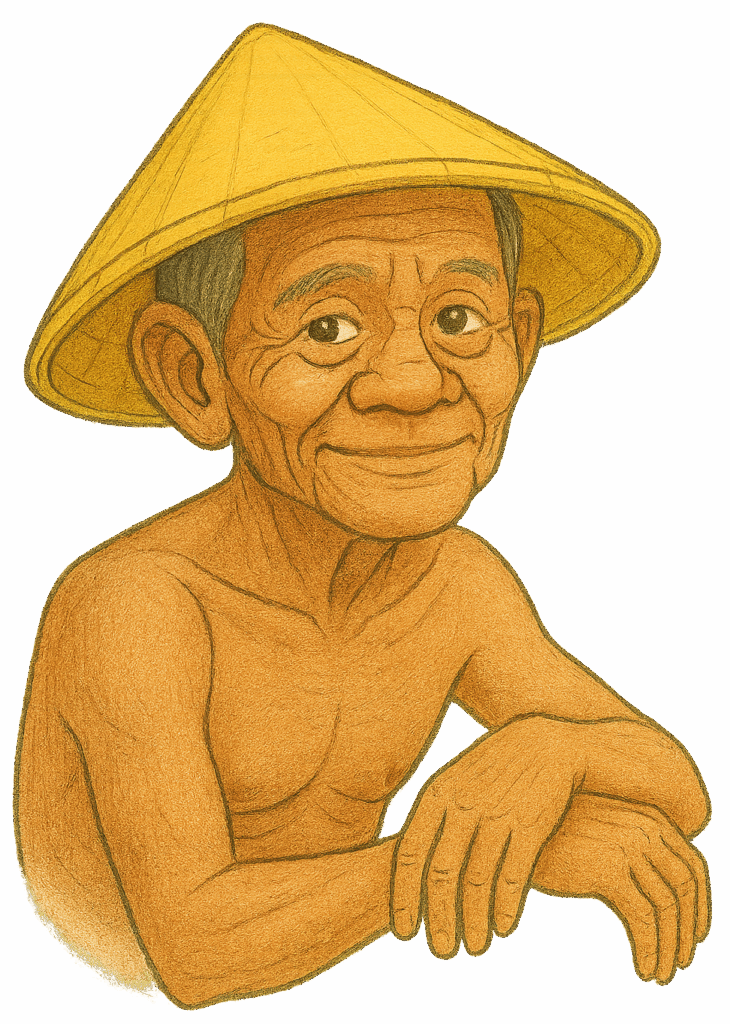
As the wise elder of the Moken “Sea Gypsy” people, Angun spends his life on the ocean. He trusts Hammie with the ancient secrets of the magic potion, “ambara”, and how to prepare correctly so he can use it to save the royals.
Psychological Traits and Emotional Complexities
Angun, the old Moken elder, is the embodiment of quiet wisdom and living tradition. His gentle voice and warm greeting to Hammie and Lizzy carry the weight of centuries, a calm authority born from a life lived in harmony with the sea. As the keeper of the “precious secrets of the sea” and the ancient recipe for the potion of hope (ambara, as he calls it), he stands at the intersection of myth and survival, blending spiritual reverence with practical knowledge.
His perceptiveness is profound. When he looks at Hammie and says: “There is something about you, young Hammie, something that sees beyond the surface,” it is more than observation; it’s recognition. Angun doesn’t measure worth through words or gifts but through the heart. His test, asking Hammie and Lizzy to share what’s within rather than offer worldly possessions, reveals a man who understands that true power and wisdom lie in intention, not material wealth.
Despite his gravitas, Angun carries a lightness. He chuckles at the idea of Lizzy turning mosquitoes into burgers and teases Hammie about his blond hair, showing that wisdom and humour are not opposites but companions. His laughter is gentle, never mocking, reflecting a soul at peace with the world’s strangeness.
Motivations and Core Values
Angun’s primary motivation is preservation of the Moken’s ancient secrets, the potion of hope, and the balance of the islands. His every action is guided by the understanding that sacred knowledge must be protected from misuse and shared only with those who will guard it with integrity.
Reciprocal generosity defines his values. His gift of shells to the hermit crabs, given simply to honour their past kindness in offering fresh water when the Moken were in need, shows a deep belief in mutual aid and respect. His reverence for nature and tradition runs through his every word, reflecting the Moken’s core philosophy: to live with the sea, not against it, taking only what is needed and giving back whenever possible.
Strengths and Vulnerabilities
Angun’s strengths:
- Ancient wisdom: His knowledge of the potion of hope and the Moken’s ancestral traditions makes him a pivotal guide.
- Discernment: His ability to read character ensures sacred knowledge is entrusted to the right hands.
- Calm authority: His gentle voice and measured actions bring peace and trust to those around him.
- Cultural grounding: His deep connection to Moken life – their boats, breath-holding, and respect for the ocean – roots him in authenticity and survival skills.
- Generosity: His instinct to give without expecting return reflects a strength of spirit that underpins his leadership.
Angun’s vulnerabilities:
Angun is portrayed as a man beyond personal conflict, but his strength – guarding the Moken’s secrets – is also a burden. The responsibility of centuries weighs silently on him. His greatest vulnerability is perhaps the fear of the knowledge falling into the wrong hands, a quiet anxiety that underscores his careful testing of Hammie and Lizzy before sharing the potion’s secret.
Background and Influences
Often referred to as a Sea Gypsy, Angun’s identity is inseparable from the sea. His people’s nomadic existence aboard kabang houseboats, their rare skill of focusing their eyes underwater like fish, and their ability to hold their breath for astonishing lengths are not just survival techniques but cultural poetry, shaping his worldview.
His respect for the ocean – its gifts, its dangers, its mysteries – defines his decisions. His long life has been spent balancing survival with stewardship, making him not just a bearer of knowledge but a living embodiment of his people’s philosophy.
Internal Conflicts and Growth
Angun’s character is one of completion rather than transformation. He has already achieved inner peace; his arc is not about change but about passing on wisdom. His internal conflict is subtle: balancing the duty to preserve the potion’s secret with the urgent need to save the islands. His decision to entrust Hammie and Lizzy marks not just a transfer of knowledge but a quiet act of faith in a new generation to carry what he has held so long.
Final Arc
Angun is the story’s spiritual anchor. He represents continuity – the thread connecting past, present, and future. His gentle humour, deep wisdom, and discerning generosity make him more than a guide; he is a symbol of what it means to live in balance with nature and tradition.
Through Angun, the story reminds us that true power is not loud or forceful but quiet, careful, and kind – and that some of the greatest heroes are those who pass the torch, trusting others to keep the flame alive.
Conclusion
At its heart, Hammie and the Moken’s Magic Potion is not just a story about islands, potions, and quests – it’s about people and creatures finding courage in each other. What makes these character journeys feel so alive is how personal they are. Hammie’s transformation from a quiet city boy seeking solitude into a leader who fights for more than himself isn’t just a hero’s arc; it’s a tender portrait of a boy discovering that true strength is born when you care enough to risk everything for others. Lizzy’s journey back from self-exile – from a girl chasing her dream alone to a princess who carries her people’s hope – is as much about love and belonging as it is about duty.
The supporting characters don’t orbit the story; they are the story’s heartbeat. Goggles, with her anxious loyalty and bursts of bravery, shows that courage often comes wrapped in fear. Lekkie, the small leech with the loudest voice, reminds us that even those who doubt themselves can become heroes in the quietest, most unexpected moments. Billy’s steady wings, Captain Somtam’s calm wisdom, and Mama Ruth’s grounded strength create a tapestry of trust and guidance that hold the group together when the seas get rough. Even the antagonists, Gingga and Sting (as well as Sandy and Mackie), are more than just villains; they are shadows cast by longing, resentment, and fear, making the light of Hammie and Lizzy’s choices shine brighter.
What makes the story resonate so deeply is the way individual growth and collective purpose are woven together. The survival of the islands doesn’t rest on a single chosen hero but on a circle of friends, each bringing their flaws and strengths, learning to lean on one another. Every scraped knee, every whispered word of encouragement, every laugh in the face of fear stitches them into something stronger than any one character alone.
In the end, the story isn’t just about saving a kingdom; it’s about how saving a kingdom saves them. Hammie learns that bravery is quieter and more tender than he imagined. Lizzy learns that leadership isn’t about perfection but about love. And together with Goggles, Lekkie, Billy, and the rest, they teach us that healing a world – whether it’s an island or a heart – is always a shared act.
The true magic of the story isn’t just the potion. It’s the way courage, community, and care for the land and each other flow between these characters, binding them – and us – to the idea that when we stand together, we become the hope we’re searching for.
Thanks for reading, and may your heart always be open to stories that inspire, blessings that uplift, and adventures that awaken your soul.