
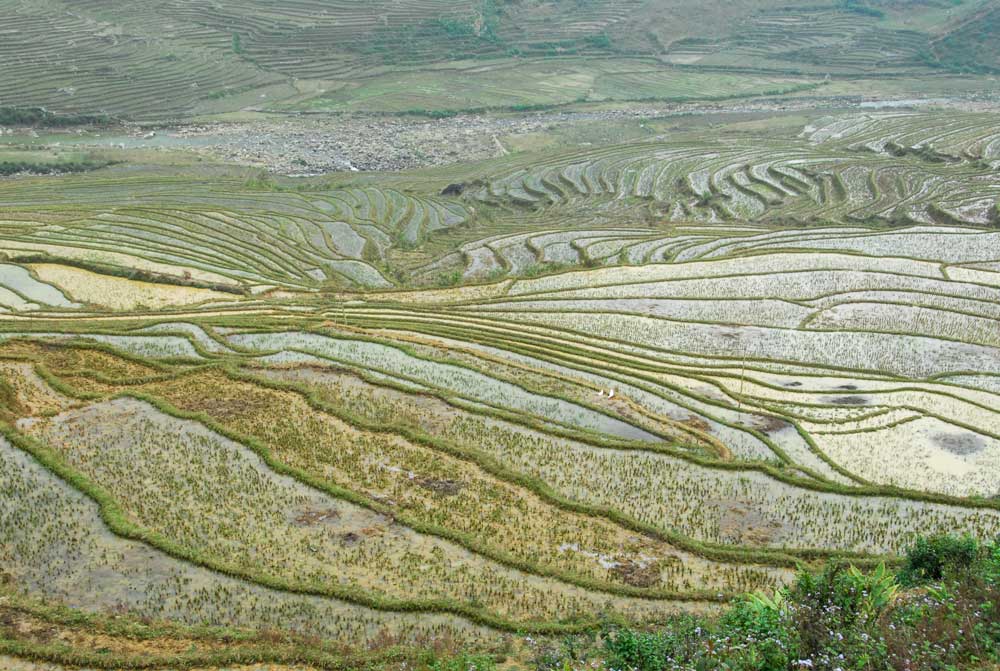
The road from Sa Pa twists down into the Mường Hoa Valley, and suddenly the bustle of Vietnam’s most famous hill town melts away. Mist hangs in folds across the mountains, rice terraces descend like green amphitheatres, and the steady murmur of the Mường Hoa Stream threads through the valley floor. Ten kilometres southeast of Sa Pa lies Tả Van, a Giay (also spelled Zay or Dzay) village where life follows the cadence of the seasons and the land itself becomes both livelihood and stage.
Here, travellers discover not the brashness of neon-lit Sa Pa, but the softer song of a rural valley — water buffalo calling across paddies, woodsmoke drifting from kitchens, and children chasing one another along muddy dykes. To step into Tả Van is to glimpse a world both timeless and quietly adapting, a living harmony of culture, land, and legend.
Legends of the Valley
The Mường Hoa Valley is more than terraces and trails; it is a landscape heavy with myth. The Giay people speak of mountain spirits who once taught their ancestors how to coax rice from steep slopes, showing them where to cut channels and build the stone dykes that carry water from the springs. Some say the valley’s fogs are the breath of protective spirits, wrapping fields in veils to shield them from misfortune.
High on the ridges lies the Sapa Ancient Stone Field, scattered with massive boulders etched with enigmatic carvings — spirals, squares, figures whose meanings have long been forgotten. Locals believe they were left by ancestors as maps or messages to the gods. At night, under a bright moon, the stones are said to whisper to those who listen, reminding the living of their ties to the earth.
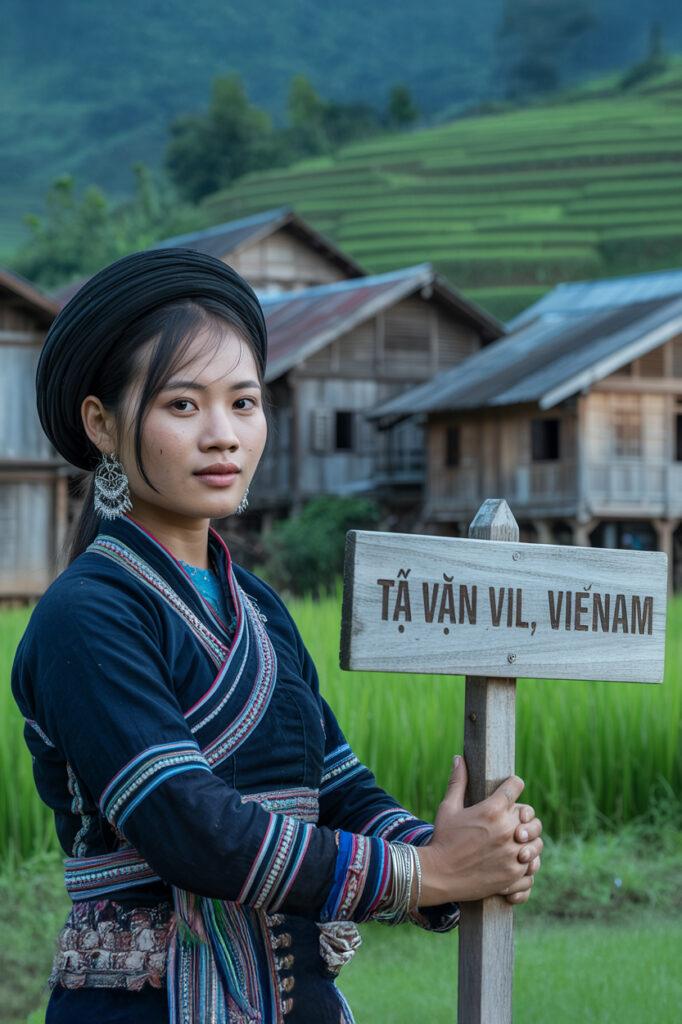
Tả Van Village, about 10 kilometres from Sa Pa, is home to the Giay ethnic minority who have farmed its terraced rice fields for centuries.
The Giay People
Unlike the H’Mông or Dao, whose flamboyant attire bursts with embroidery, the Giay are less conspicuous in dress. Women often wear indigo jackets with bright scarves, men in simple dark trousers and shirts. Their homes are low wooden structures with tiled or corrugated roofs, often raised slightly on stilts against floodwaters. Inside, the hearth is the heart — a place for warmth, cooking, and stories.
Hospitality is a Giay hallmark. A traveller entering Tả Van is likely to be offered green tea or a cup of rice liquor before being asked a single question. Meals are communal, plates of sautéed greens, stir-fried pork, grilled river fish, and bamboo-shoot soup shared at low wooden tables. Rice, naturally, is ever-present — sticky rice steamed in bamboo tubes or plain white rice served with every dish.

Festivals and Daily Life
Festivals punctuate the Giay year, each blending animist beliefs with seasonal rhythms.
- Roong Pooc Festival (spring): Held in the second lunar month, this planting celebration brings villagers to a communal field where they perform dances to invite a bountiful harvest. Offerings of chickens, sticky rice, and rice wine are made to the land spirits, while young men and women compete in games.
- Tết Nhảy (Lunar New Year): Families gather for ritual dances, symbolic “jumping games,” and songs invoking good fortune. Houses are cleaned, altars refreshed, and debts settled.
- New Rice Festival (autumn): As terraces glow gold, the first sheaves are harvested and offered to the spirits before being eaten. Families cook special dishes, and rice wine flows in gratitude to ancestors.
Outside festivals, daily life follows the steady pulse of rice. Planting in May and June, weeding in July, guarding fields from buffalo and ducks, and harvesting in late September or October. Winter is slower: repairing houses, weaving cloth, telling stories by firelight.

A Living Landscape
The terraces of the valley are masterpieces of human adaptation. Cut into the mountains centuries ago, they follow the contours of the slopes in elegant sweeps. Irrigation ditches channel water from high springs, feeding each level in sequence. When filled, the paddies reflect the sky, creating mirrors that double the valley’s beauty.
- May–June: Bright green seedlings planted, terraces shimmer like jade.
- July–August: Fields are lush, alive with dragonflies and frogs.
- September–October: Gold floods the valley, harvest time with songs and laughter.
- November–February: Mist cloaks the valley, nights are crisp, fields rest in silver and brown.
Bamboo groves rustle on the slopes, cardamom grows in shaded patches, and water buffalo plod through mud, essential to every household.
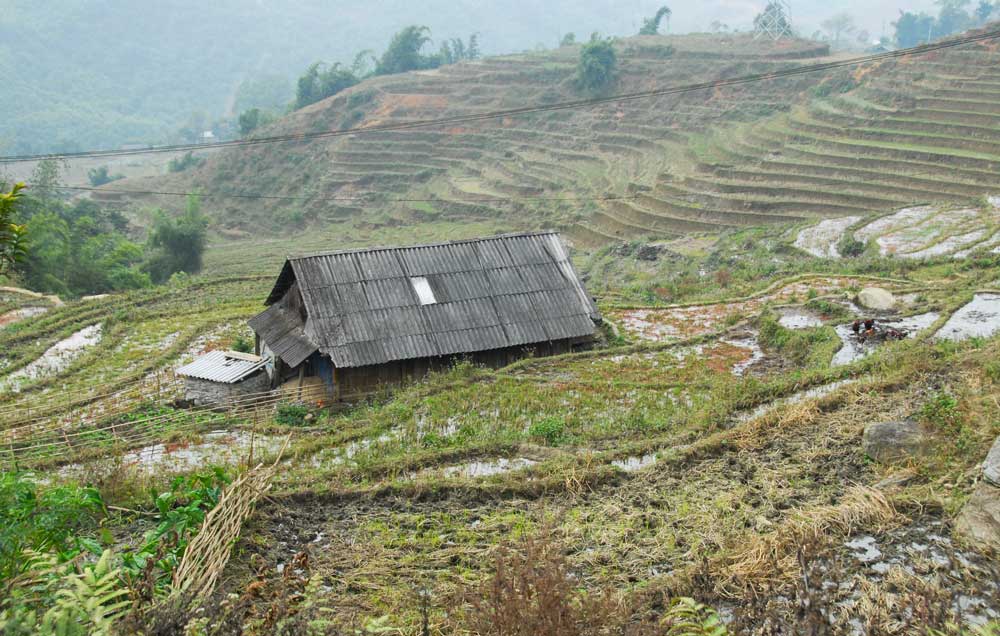
Trekking Through Tả Van
Trekking is the valley’s greatest allure. Trails weave through fields, bamboo forests, and across suspension bridges. Depending on time and energy, travellers can explore short loops or full-day hikes.
Option 1: Sa Pa → Lao Chải → Tả Van (approx. 10 km)
- Difficulty: Moderate, 3–4 hours.
- Route: Start from Sa Pa, descend into the valley past Lao Chải Village (H’Mông), then follow the river to Tả Van.
- Highlights: Terraces at Lao Chải, bamboo groves, Mường Hoa Stream crossings.
Option 2: Tả Van → Giang Tả Chải → Bản Hồ (approx. 12 km)
- Difficulty: Moderate-hard, 5–6 hours.
- Route: From Tả Van, cross suspension bridges to Giang Tả Chải (Dao), continue through forests to Bản Hồ.
- Highlights: Waterfalls, red Dao houses, hot springs at Bản Hồ.
Option 3: Multi-day Trek (20–25 km over 2 days)
- Combine Tả Van, Bản Hồ, and Seo My Ty Lake. Overnight in homestays.
- Highlights: Ancient Stone Field, lake views, night with Giay or Dao families.
Local guides (often Giay or H’Mông) charge modest fees but enrich the journey with stories of farming, folklore, and family life.
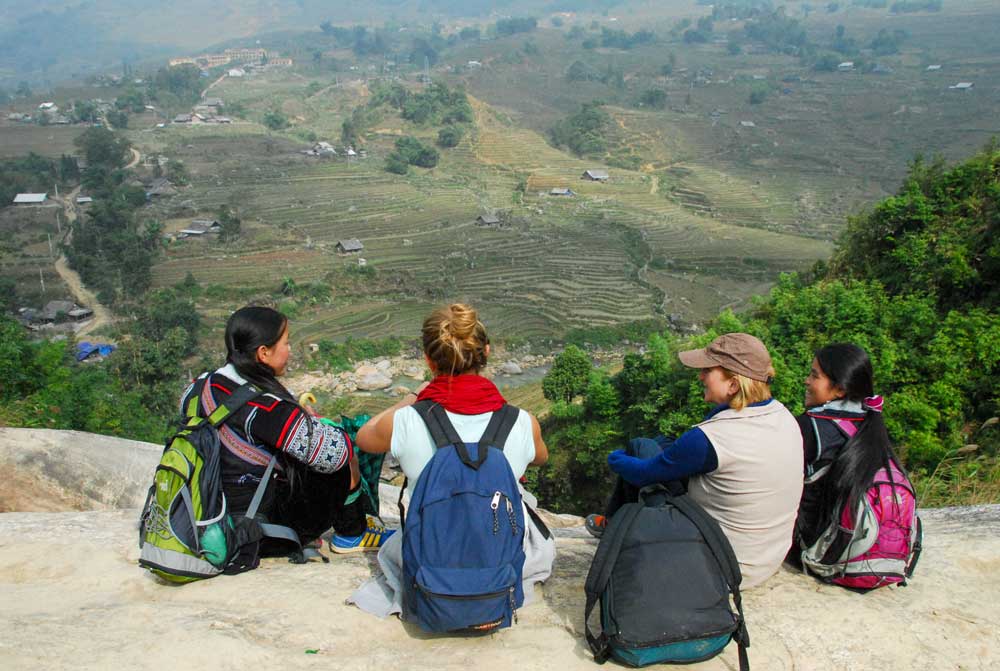
A Valley of Spirit
What lingers in Tả Van is not just the sight of terraces but the sense of being folded into another rhythm. Mist at dawn softens the outlines of stilt houses; children wave as you pass; a woman bends to cut rice, her sickle flashing gold in the sun. At night, when the valley grows quiet, you sit under the stars with a glass of rice wine, hearing only the stream and the rustle of bamboo.
For the Giay, this valley is more than home. It is an inheritance from ancestors and a gift to descendants. For the traveller, it is a chance to step into that inheritance, if only briefly, and to leave with the memory of mornings wrapped in cloud, golden fields stretching into distance, and the warmth of a village where the land and people are still one.
Food and Drink
Eating in Tả Van is less about restaurants and more about the homestay table. Meals reflect the valley’s bounty:
- Sticky rice (xôi): Steamed in bamboo tubes or banana leaves.
- River fish: Grilled over open flames, often wrapped in banana leaf.
- Pumpkin shoots and mountain herbs: Stir-fried simply.
- Thắng cố: A robust stew of horse meat and herbs, popular at festivals.
- Homemade rice wine (rượu): Served in tiny cups, always refilled.
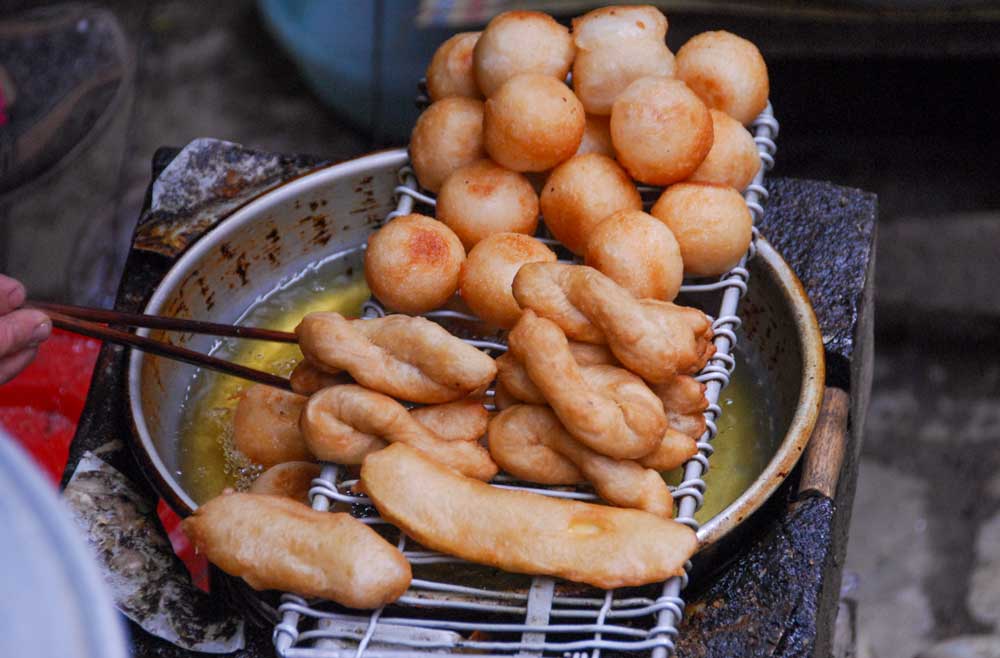
Breakfast might be fried eggs, sticky rice, or corn cakes, washed down with strong tea. Evenings end with rice wine and laughter, stories told over the crackle of a wood fire.
Practical Travel Information
Getting There
- From Hanoi: Overnight train to Lào Cai (8 hours), then 1-hour bus/taxi to Sa Pa.
- From Sa Pa: Taxi or motorbike 10 km (20–30 minutes), about 200,000 VND ($8–9). Trekking from Sa Pa takes 3–4 hours.
- Village Entry Fee: 75,000 VND (about $3), used for trail upkeep.
When to Visit
- March–May: Blossoms, clear skies, pleasant walking.
- June–August: Green terraces but heavy rain, muddy trails.
- September–October: Golden harvest, peak beauty.
- November–December: Cool, misty, atmospheric.
Packing Tips
- Sturdy trekking shoes, rain jacket, insect repellent.
- Cash — ATMs are scarce.
- Modest clothing; respect local customs.
- Layers for cool nights.
Homestays
- Basic bedding, mosquito nets, hot showers in many.
- Popular choices include Luckydaisy, Tả Van View, and family-run stilt houses.
- Book ahead in harvest season.
Etiquette
- Ask before photographing people.
- Walk on dykes, not in rice.
- Remove shoes if invited indoors.
- A small gift — fruit, tea, or printing a photo later — is appreciated.
☛ Read more about Vietnam: The Hill Tribes of Sapa


Blog post and photos by Peter who has been travelling almost full-time since 2005 and has been to over 122 countries. He visited several countries, such as Japan, more than 20 times. Peter is Editor-in-Chief and Publisher of GlobeRovers Magazine, an independent travel magazine focused on intrepid destinations.